36,627 people live in Natick, where the median age is 44 and the average individual income is $75,565. Data provided by the U.S. Census Bureau.
Total Population
Median Age
Population Density Population Density This is the number of people per square mile in a neighborhood.
Average individual Income
Natick is the kind of town that quietly checks every box without ever feeling like it's trying to. Sitting roughly 18 miles west of Boston in the heart of MetroWest, it manages a balance that most suburbs only aspire to: a genuinely walkable downtown, two commuter rail stops, immediate highway access, and a public school system that ranks among the strongest in the state. That combination is exactly why it stays in demand even when the broader market wobbles.
The town tends to attract a specific kind of buyer — professionals who commute into Boston or the surrounding tech and biopharma corridors, and families who want top-tier schools without committing to the price tag of towns like Wellesley or Wayland. You'll find downsizers gravitating toward the walkable condos near Natick Center, young families chasing colonials with real yards, and high-earners building or buying new construction in South Natick. What unites them is a desire for convenience and stability, and Natick delivers both. It's a place where you can walk to a farmers market on Saturday morning, catch an express train to South Station in under 40 minutes, and still send your kids to schools that consistently land in the top 25 districts statewide.
Natick has firmly established itself as a premium-tier MetroWest market, and the numbers reflect that. The median listing price generally runs between $930,000 and just over $1,015,000, depending on the season and what inventory happens to be available. Nearly 60% of homes in town are valued above $750,000, which tells you most of the entry-level housing has long since been priced out of "starter home" territory.
The defining feature of this market is scarcity. Inventory stays chronically low, which keeps steady upward pressure on prices. Homes move fast — median days on market hovers around 14 to 18 days, and the most desirable listings often go under agreement in under ten. This is a seller's market by almost any measure, and it has been for years. The average sale-to-list ratio holds consistently above 101%, meaning the typical home sells for slightly more than asking, a direct result of the multiple-offer environments that have become the norm here.
Looking ahead, the fundamentals point toward continued strength. Even with mortgage rates fluctuating at the national level, Natick's proximity to Boston and the tech corridor keeps demand ahead of supply, and equity tends to hold steady through minor seasonal dips. Growth is also segmenting by neighborhood: high-end pockets like South Natick (historic charm, larger lots) and the Fells command serious premiums, while West Natick and the areas near the Framingham line remain the more accessible entry points for townhomes and smaller single-family homes.
Buying here requires speed, financial readiness, and a willingness to play the game the way local sellers expect it to be played. A common pattern: a home debuts midweek, hosts open houses over the weekend, collects four or more offers, and goes to "highest and best" by Monday or Tuesday. If you're not pre-approved and ready to move when the right listing appears, you'll miss it.
Roughly 41% to 43% of Natick homes sell above the original asking price, so a smart strategy is to shop slightly below your maximum pre-approval — leaving yourself room to bid competitively rather than maxing out on the list price alone. Activity spikes noticeably in late winter and spring as families try to time their moves around the school calendar, so expect the most competition during those months.
Because sellers hold the leverage, buyers routinely adjust their contingencies to stand out. Two tools come up again and again. The first is the inspection contingency — many buyers either conduct a pre-inspection during a private showing or write an "informational only" clause promising not to request repairs below a set dollar threshold. The second is the appraisal gap guarantee, where a buyer commits in writing to cover a shortfall in cash if the bank's appraisal comes in below the agreed price. Both are now common enough that not using them can put an otherwise strong offer at a disadvantage.
As for what you'll actually be buying, Natick offers more architectural variety than many of its zoning-locked neighbors:
| Property Type | Characteristics | Tends to Suit |
|---|---|---|
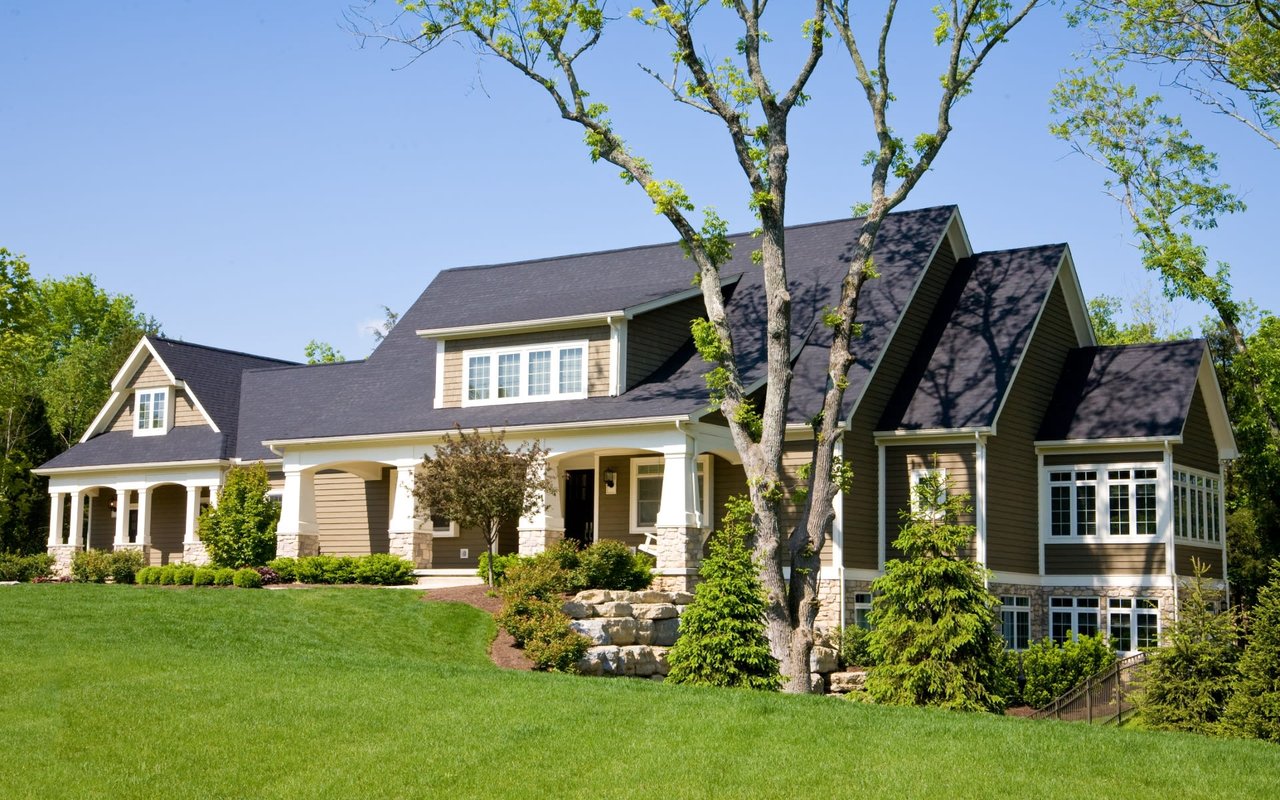
| Classic Colonials & Capes | Found town-wide, many mid-century with modern updates | Families wanting traditional yards and established neighborhoods |
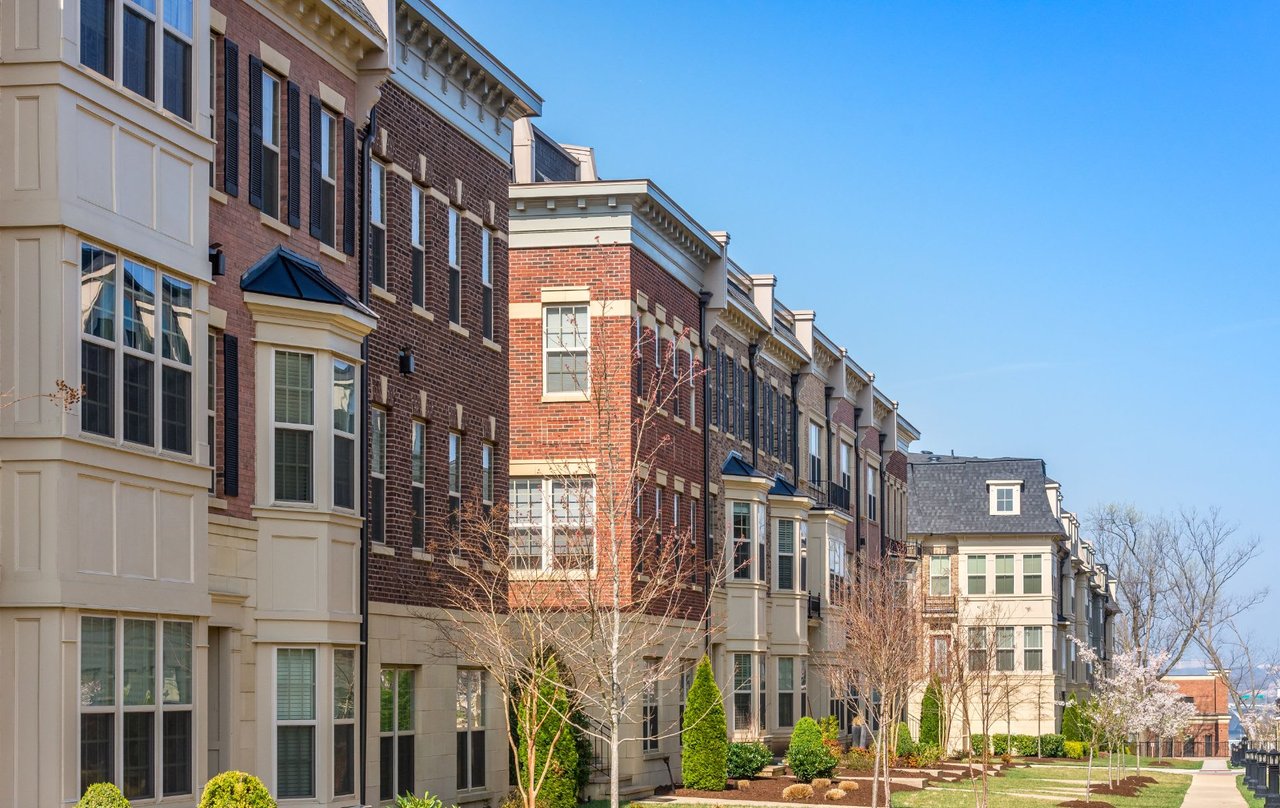
| Modern Townhouses | Emerging near transit and commuter corridors, low-maintenance | Professionals wanting quick Boston access without yard work |
| Downtown Condos | Centered on Natick Center, highly walkable | Downsizers and first-time buyers prioritizing a walkable lifestyle |
| New Construction Luxury | 4,000+ sq ft homes replacing older split-levels and capes | High-end buyers wanting turnkey luxury |
Selling in Natick puts you in an enviable position, but the leverage only pays off if you execute well — these buyers are sophisticated and well-funded, and they notice missteps.
The single most important decision is pricing, and the counterintuitive truth is that overpricing is the costliest mistake you can make even in a seller's market. If a home lingers past its first two weekends of open houses, savvy buyers start to assume something is wrong. The strategy that actually works is pricing right at or slightly below true market value. That stimulates maximum foot traffic on the opening weekend, triggers a multi-offer situation, and lets the bidding push the final number well above where a higher list price would have landed you.
Staging matters more here than in most markets because the buyer pool skews toward busy professionals who will pay a real premium for a home that needs zero immediate work. Neutralize bold paint colors, maximize natural light, and depersonalize. Highlighting a dedicated home office or a finished basement pays off disproportionately, since hybrid work remains a fixture for local buyers. And don't overlook curb appeal — in a town that prides itself on New England character, power-washing the siding, refreshing porch paint, and tightening up the landscaping deliver immediate returns.
Timing tends to be compressed. A well-marketed listing often goes live Wednesday or Thursday, hosts heavy weekend open houses, and sets an offer deadline for Monday or Tuesday. Priced and marketed correctly from day one, most homes move from active to under agreement in roughly 10 to 18 days.
Winning in Natick takes a different playbook than a standard suburban search. A few strategies consistently separate successful buyers from frustrated ones.
First, lean on the West Natick value gap. If pricing in Natick Center or South Natick is pushing past your limit, focus your search around the West Natick MBTA station. You get excellent Boston rail access, and the surrounding mid-century split-levels, ranches, and capes typically trade at a lower price per square foot than the rest of town.
Second, get ahead of the inspection. Bring a trusted inspector or knowledgeable contractor to a private showing before the offer deadline so you can evaluate the roof, HVAC, and foundation in advance — that lets you confidently waive the inspection contingency. If a full waiver feels too risky, an "informational only" clause stating you won't walk away or request repairs for any single issue under, say, $5,000 or $10,000 reassures the seller without leaving you fully exposed.
Third, master the appraisal gap guarantee. Because bidding wars routinely push sale prices past list, bank valuations sometimes lag. Sellers fear a low appraisal precisely because it can blow up financing. Stating clearly that you hold the liquid reserves to cover a specific shortfall — often in the $15,000 to $30,000 range — makes your offer far more bulletproof.
Finally, vet the septic and oil-tank situation. Much of Natick is on town water and sewer, but certain older pockets, particularly in South Natick, rely on private septic systems or sit on homes that once used underground oil tanks. Always confirm Title V compliance before closing, and make sure any old underground tank has been properly decommissioned, removed, and documented with soil testing. Skipping this step can turn into an enormous liability later.
Pricing a Natick home is part math, part psychology. MetroWest buyers are analytical and well-informed, so an arbitrary or aspirational number gets exposed quickly — even when the market favors sellers.
Start with comps, but slice the data finely. Inventory moves so fast that anything older than two to three months is already stale, so weight your analysis toward properties that went under agreement in the last 30 to 60 days. Match by neighborhood, not town-wide averages: a 2,500-square-foot colonial near historic John Eliot Square in South Natick commands a very different premium than the same home near the Framingham border. And because Natick's schools are uniformly strong, the usual elementary-district filtering matters less here — proximity to the high school and middle school campus and to transit are the truer value drivers.
The psychology is where sellers most often go wrong. In slower markets, you price high to leave negotiating room. In Natick, that backfires. The smarter move is treating your listing as an event with a ticking clock. Pay attention to search-bracket thresholds — a home worth around $1,010,000 priced at $999,000 captures every buyer searching up to $1M and those searching just above it, flooding your open house with traffic. When buyers walk into a packed weekend showing and see their peers competing for the same space, the resulting FOMO routinely drives offers well past your actual reservation price by the deadline. Pricing slightly under fair market value isn't leaving money on the table; it's the mechanism that creates the bidding war.
Natick offers a rare suburban trifecta — a walkable downtown, strong rail access, and immediate proximity to major highway corridors — though walkability varies sharply depending on where in town you land.
For commuters, the town is anchored by two MBTA Commuter Rail stops on the Framingham/Worcester Line. Natick Center Station sits right downtown, and an express train reaches South Station in about 35 to 40 minutes, which makes it popular with financial-district and downtown workers. West Natick Station offers larger parking capacity and serves the western side of town. Drivers have Route 9 and the Mass Pike (I-90) just to the north for a direct run into Boston or Cambridge — though peak rush hour can stretch that to an hour or more.
Walk scores tell a tale of two Naticks. Natick Center earns a Walk Score in the mid-80s, where residents stroll to the town common, the Morse Institute Library, coffee shops, the farmers market, and the train. Move out toward North Natick or the residential lanes of South Natick, and the town becomes firmly car-dependent, with scores dropping into the 20s and 30s. For cyclists, the standout is the Cochituate Rail Trail, a paved multi-use path linking Natick Center to the Framingham line and running up toward the Natick Mall — a safe, traffic-free route good for both recreation and errands.
It's also worth noting that not every well-paid Natick resident commutes into Boston. The town borders major employment hubs in Waltham, Newton, and Burlington — dense clusters of tech, biopharma, and healthcare — and the Golden Triangle around the Natick Mall and Route 9 is one of the largest retail and commercial sectors in New England in its own right.
For family buyers, the school system is frequently the deciding factor, and Natick delivers. Natick Public Schools consistently ranks among the top 25 districts in Massachusetts, serving roughly 5,300 students across an early childhood center, five elementary schools, two middle schools, and one high school.
By Niche's rankings, the district sits at #22 out of 217 districts statewide and #12 in Middlesex County — a region known nationally for its public education. The state's Department of Elementary and Secondary Education classifies the district as making substantial progress toward its targets, supported by strong achievement scores in English, math, and science.
| School Level | Schools | Why It Matters for Buyers |
|---|---|---|
| High School | Natick High School (9–12) | Ranked #35 among MA public high schools; modern campus built in 2012, 13:1 student-teacher ratio, strong athletics |
| Middle Schools | Kennedy & Wilson (5–8) | Kennedy rebuilt as a state-of-the-art facility in 2021; both feed into the central high school |
| Elementary | Brown, Lilja, Ben-Hem, Memorial, Johnson (K–4) | Brown ranks among the top 65 public elementary schools statewide with an active PTO |
The practical takeaway for buyers is reassuring: because every neighborhood school performs at a high level, you don't have to stress about choosing the "wrong" neighborhood and missing out on a good school. That town-wide consistency is part of what keeps Natick property values so stable.
Natick balances its commercial density with genuinely good green space, which matters for buyers weighing lifestyle alongside square footage.
The headliner is Cochituate State Park on the north side of town, built around Lake Cochituate and its three linked ponds — a regional draw for swimming, boating, kayaking, and fishing, complete with a public boat ramp. The Cochituate Rail Trail, a 3.7-mile paved and fully ADA-accessible path, doubles as both a scenic recreation route and a practical car-free connection to the town center. Over in South Natick, the Broadmoor Wildlife Sanctuary offers more than nine miles of MassAudubon trails through wetlands and woodlands along the Charles River — and entry is free for Natick residents. For organized recreation, John J. Lane Park rounds things out with community gardens, sand volleyball, bocce, and large playgrounds, while neighborhood spots like Memorial Beach and Coolidge Field add tennis and basketball courts close to home.
Natick isn't a late-night club town, and that's rather the point — its dining scene reads as a lifestyle signal, telling you the place values community, craft, and family-friendly versatility. The social life splits across two distinct hubs.
Natick Center is the walkable, independent heart of it, anchored by The Center for Arts in Natick (TCAN), a restored 1875 firehouse hosting live music, comedy, and indie films. Around it you'll find sidewalk seating, artisanal bakeries, cozy cafes, and local taprooms — the kind of downtown where a Saturday farmers market rolls naturally into an early-evening cocktail or microbrew. Dining here signals a preference for community and supporting local entrepreneurs.
Just north, the Route 9 and Mall corridor brings a completely different energy: sleek modern bistros, high-end sushi lounges, and upscale steakhouse concepts catering to the professional crowd looking for a vibrant happy hour or a polished weekend dinner without driving into the city. Having both within a few minutes of each other is a real quality-of-life perk.
Taxes are an easy thing to overlook on a neighborhood page, but they directly shape your monthly escrow, so they're worth understanding before you budget.
For Fiscal Year 2026, Natick's residential property tax rate is $12.17 per $1,000 of assessed value. Notably, Natick uses a single tax rate, meaning residential and commercial owners pay the same — some towns split the rate to tax businesses more heavily and relieve homeowners, but Natick's unified approach puts a direct share of the municipal budget on residents. Like all Massachusetts communities, the town operates under Proposition 2½, which caps annual levy increases, though voters can approve overrides for specific services or school expansions. Natick passed a significant municipal override for FY2026, which added roughly $0.54 to the current rate.
In real terms: with the median single-family home assessed around $838,600, the typical annual tax bill lands near $10,206, or about $850 a month added to a mortgage. A home assessed at $1,200,000 would owe roughly $14,604 annually. A five-figure tax bill can startle out-of-state buyers, but Natick's rate is competitive for MetroWest — generally lower than neighbors like Wayland or Acton — and most local buyers view it as a worthwhile investment in the schools and well-kept parks that hold property values steady.
Moving in a market this fast is far easier with someone who knows how to position an offer, time a listing, and read the local dynamics in real time — and that's where having the right broker in your corner makes the difference. Frank Neer brings more than 24 years of South Shore and MetroWest real estate experience, a reputation as a skilled negotiator who sweats every detail of a transaction, and a track record that includes ranking among the top 1% of agents in the country. Whether you're trying to win a competitive bid, price a home to spark a bidding war, or simply understand whether a neighborhood fits your life, he's a resource worth reaching out to before you make a move.
You can reach Frank directly by phone at (781) 775-2482 or by email at [email protected]. Whether you're buying, selling, or just starting to explore what Natick has to offer, a no-pressure conversation is the best first step.
There's plenty to do around Natick, including shopping, dining, nightlife, parks, and more. Data provided by Walk Score and Yelp.
Explore popular things to do in the area, including D'arcy Geoff Acupuncture and Herbal Medicine, Tedeschi Food Shops, and Hiro Sushi.
| Name | Category | Distance | Reviews |
Ratings by
Yelp
|
|---|---|---|---|---|
| Dining | 0.24 miles | 1 review | 5/5 stars | |
| Dining · $ | 0.39 miles | 1 review | 1/5 stars | |
| Dining | 0.82 miles | 0 reviews | 0/5 stars | |
| Shopping | 0.13 miles | 55 reviews | 4.1/5 stars | |
| Active | 0.18 miles | 0 reviews | 0/5 stars | |
| Active | 0.19 miles | 0 reviews | 0/5 stars | |
| Active | 0.2 miles | 15 reviews | 4.2/5 stars | |
| Active | 0.2 miles | 0 reviews | 0/5 stars | |
| Active | 0.29 miles | 0 reviews | 0/5 stars | |
| Active | 0.52 miles | 0 reviews | 0/5 stars | |
| Active | 0.52 miles | 2 reviews | 3/5 stars | |
| Active | 0.72 miles | 0 reviews | 0/5 stars | |
| Active | 0.81 miles | 0 reviews | 0/5 stars | |
| Beauty | 0.11 miles | 0 reviews | 0/5 stars | |
| Beauty | 0.12 miles | 0 reviews | 0/5 stars | |
| Beauty | 0.13 miles | 0 reviews | 0/5 stars | |
| Beauty | 0.14 miles | 0 reviews | 0/5 stars | |
| Beauty | 0.23 miles | 4 reviews | 5/5 stars | |
| Beauty | 0.29 miles | 3 reviews | 2.3/5 stars | |
| Beauty | 0.52 miles | 0 reviews | 0/5 stars | |
| Beauty | 0.52 miles | 0 reviews | 0/5 stars | |
| Beauty | 0.61 miles | 0 reviews | 0/5 stars | |
| Beauty | 0.8 miles | 0 reviews | 0/5 stars | |
| Beauty | 0.82 miles | 0 reviews | 0/5 stars | |
|
|
||||
|
|
||||
|
|
||||
|
|
||||
|
|
||||
|
|
Natick has 15,409 households, with an average household size of 2. Data provided by the U.S. Census Bureau. Here’s what the people living in Natick do for work — and how long it takes them to get there. Data provided by the U.S. Census Bureau. 36,627 people call Natick home. The population density is 3,940 and the largest age group is Data provided by the U.S. Census Bureau.
Total Population
Population Density Population Density This is the number of people per square mile in a neighborhood.
Median Age
Men vs Women
Population by Age Group
0-9 Years
10-17 Years
18-24 Years
25-64 Years
65-74 Years
75+ Years
Education Level
Total Households
Average Household Size
Average individual Income
Households with Children
With Children:
Without Children:
Marital Status
Blue vs White Collar Workers
Blue Collar:
White Collar:
Whether you are buying or selling a home on the South Shore, our goal is to provide you with the level of personal attention and services you need to ensure a smooth and successful real estate transaction.
Contact Us5 Brooks St Cohasset MA 02025