On October 9, 2025, the Cohasset Conservation Commission opened a file on a project at 695 Jerusalem Road: a 165-foot stone seawall and a 121-foot dock with a ramp and float, reaching toward Little Harbor. Two weeks later, at the October 23 hearing, the seawall had been dropped from the plans entirely and the dock had been cut back by roughly twelve feet on the harbor side. The property hadn't changed in those fourteen days. The permitting process had.
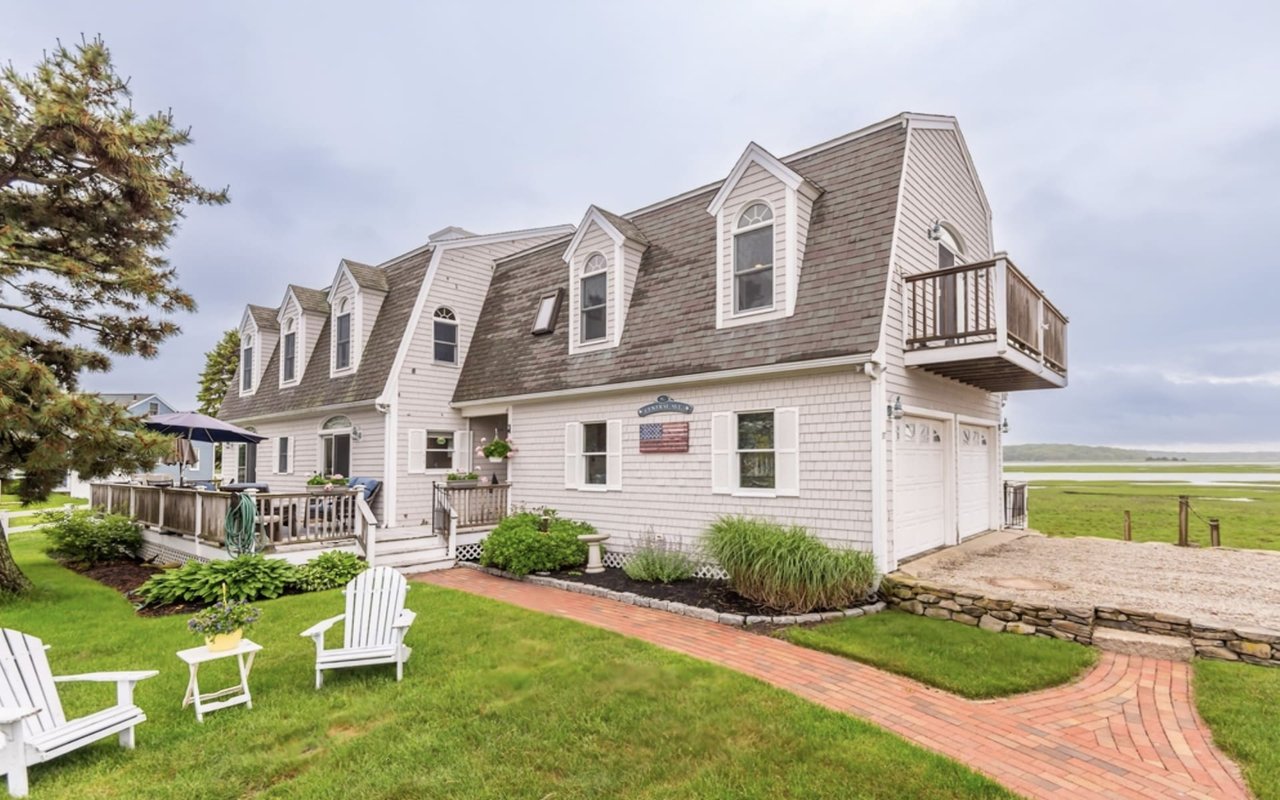
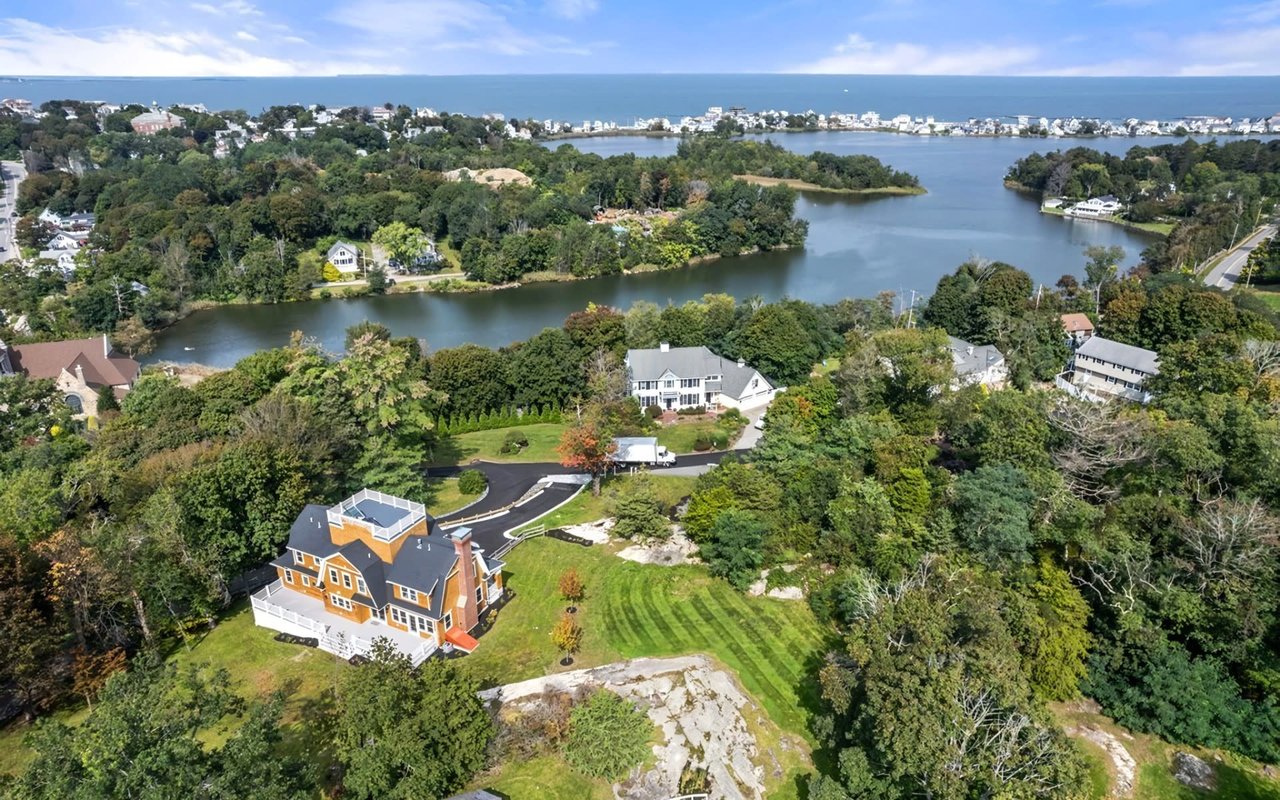
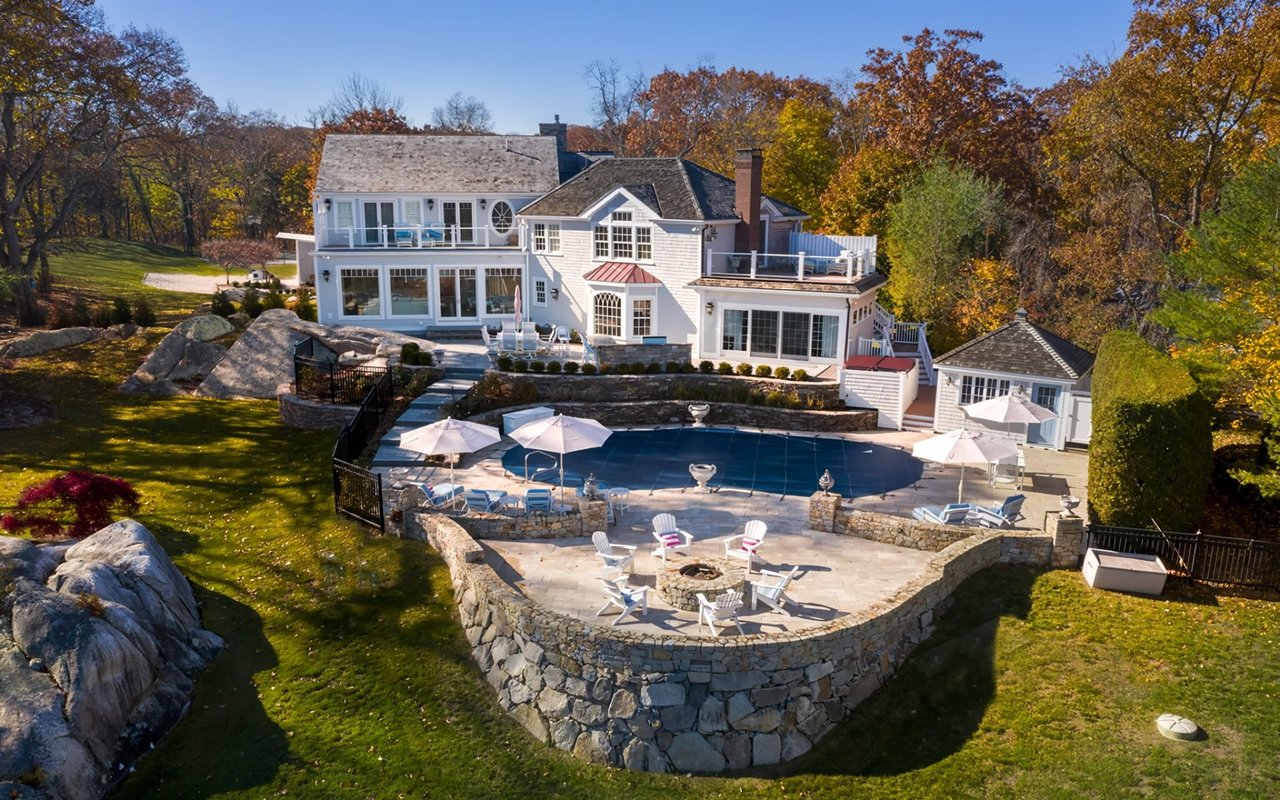
That is the detail worth sitting with before falling for a listing photo of a private dock on the water side of Jerusalem Road, Atlantic Avenue, or any of Cohasset's harbor-facing streets. A dock or seawall in a photograph is not a finished asset the way a kitchen or a roofline is. It is a structure that answers to state and federal review, to a town commission, and in practice, to the neighbors who show up at the hearing.
The two weeks that changed the plans
The original 695 Jerusalem Road application, filed by Paul Seaberg, described a seawall roughly three feet high and a dock built on 22 piers, elevated over marsh and mudflat to reach deeper water. The site sits inside a FEMA AE flood zone with a base flood elevation of 10 feet. The proposed seawall topped out at 7.5 feet, a gap commissioners flagged directly in the October 9 minutes: the wall, as designed, would not protect the house it was meant to shield in an actual flood event. That single number tells you something buyers rarely think to check. A seawall on a listing sheet is not automatically a flood-protection feature. It may be a shoreline stabilization measure that happens to sit near a house, built to a different standard than the one a buyer assumes.
By the October 23 hearing, the seawall was gone from the application altogether, and the dock had shrunk. An abutter raised two separate objections at the hearing. First, he argued the dock would be visible from Joy Place, from the adjacent cemetery, and from the Jerusalem Road scenic overlook, and that much of the structure would sit on exposed mudflats at low tide. Second, he cited state DEP Policy 92-1 to argue that the slope along the property, which he said exceeded 10:1 and in places approached 1:1, met the regulatory definition of a Coastal Bank, a classification that would pull the project into a stricter review track. Letters of support from two neighboring addresses came in on the other side. The commission's own engineer had already confirmed the project needed both a DEP Waterways Chapter 91 License and an Army Corps of Engineers General Construction Permit before a shovel could touch the marsh.
None of this means the project is troubled. It means the shape of a waterfront amenity on a Cohasset harbor lot is genuinely unsettled until the permitting record closes, and that record is public, searchable, and worth reading before an offer goes in, not after.
Why one dock answers to three different authorities
The reason a project like this takes months and multiple hearings is that no single agency owns the decision. A private dock, pier, seawall, or float in tidal water in Massachusetts typically has to satisfy:
- MassDEP under Chapter 91, the state's Public Waterfront Act, which decides whether the structure is water-dependent and whether it fits an expedited Simplified License track. MassDEP's waterways permitting FAQ says that track is available for small residential structures under 600 square feet, with a 15-year term.
- The U.S. Army Corps of Engineers, which reviews the same work under federal jurisdiction, running in parallel with the state process rather than replacing it.
- The local Conservation Commission, which applies the Massachusetts Wetlands Protection Act and the town's own wetlands bylaw, and which is where abutters actually get a seat at the table.
The Town of Provincetown's Chapter 91 license instructions say an already-licensed structure may be maintained or repaired without a new license, but a change in its length, width, or height requires one. For a buyer, that means the age and permit history of a dock matters as much as its condition. A structure with a clean, current Chapter 91 license is a known quantity. One with no clear license on record is worth investigating before purchase.
A sewer town with septic pockets
Cohasset is unusual among South Shore coastal towns in that most of it runs on municipal sewer, not septic. The town's Sewer Commission was established by an act of the state legislature in 1962, and today the system covers two districts, Central Cohasset and North Cohasset, connecting well over 1,600 service accounts through roughly 60 miles of pipeline to a wastewater treatment facility operated by Woodard and Curran. For a buyer used to septic-dependent towns nearby, that can be genuinely good news.
But "Cohasset has sewer" is a town-level fact, not a parcel-level guarantee, and the sewer district boundary is a mapped line, not the town line. As the South Shore Times reported, that distinction played out in a May 2025 dispute, when a developer named John Ormond brought Article 18 to Town Meeting, asking to add two rear lots of a four-lot Lambert Lane subdivision into the North Cohasset Sewer District. The plan was to connect those lots to Hingham's sewer infrastructure through a short extension across Cohasset property, a connection Hingham had already approved. Town Manager Christopher Senior clarified that the two lots in question sat outside the mapped North Cohasset district, meaning that absent a Town Meeting vote to redraw that boundary, those parcels would be required to use private septic systems instead, septic plans Ormond told the Select Board were "already designed and ready to go." The board took no action, and the question went to voters as a citizen petition at the following Annual Town Meeting.
The lesson for a buyer isn't that Cohasset's sewer system is unreliable. It is that a specific parcel's status inside or outside the district map is a fact to confirm, not assume, especially for newer subdivisions, boundary lots, or any property near a town line shared with Hingham or Hull.
What to ask before you write an offer
For a waterfront or near-waterfront property in Cohasset, a short diligence list covers most of the ground:
- Does the dock, pier, seawall, or bulkhead have a current Chapter 91 license on file, and does the license term still have years remaining?
- Has any work been done on that structure since the license was issued, and if so, was it filed as maintenance or as an alteration requiring a new license?
- Is the parcel inside the Central or North Cohasset Sewer District, or does it rely on a private septic system?
- If there is an open Conservation Commission file on the property or an adjacent lot, what is the current status?
- If flood zone designation applies, does any shoreline structure meet or fall short of the base flood elevation, the way the original 695 Jerusalem Road seawall did?
Every one of these is a question a listing sheet answers by omission. The Conservation Commission's meeting minutes, the Sewer Department's district maps, and the state's Chapter 91 license records are all public documents, and reading them before an offer is the difference between buying a dock and buying a permitting question with a house attached.
Quick answers for waterfront buyers
If a dock already exists and looks fine, do I still need to check its Chapter 91 status? Yes. Check the license history and any records of work done on the structure.
If the house is on Cohasset's sewer system, do I ever need a septic inspection? No, a home properly connected to the Central or North Cohasset Sewer District has no septic system. The step worth confirming is that the specific parcel is actually inside the mapped district, not simply located in Cohasset.
What should a seller check before repairing storm damage to a seawall? The structure's license status and the scope of the work. Routine maintenance and repair of an already-licensed structure does not require a new Chapter 91 license, but changes to its length, width, or height require a new one.
Waterfront property in Cohasset rewards patience and rewards a buyer who reads the file before falling for the view. The Frank Neer team works these transactions from the harbor side out, coordinating with local boards, engineers, and the town's own permitting history before an offer ever goes in. If a Cohasset waterfront property has your attention, reach out and let's look at the file together before you look at the closing date.
This article is general information, not legal, tax or financial advice. Consult a qualified professional about your situation.